9th June 2026
Work socials have changed a lot in five years. The post-work pub still has a place, but in a hybrid workforce where half the team hasn’t been in the office on the same day for a fortnight, the casual catch-up that used to happen organically isn’t really organic any more. It has to be designed in. And the venues that used to host them are competing now with a much broader category of work social ideas in London that lean into doing something rather than just being somewhere.
The agencies and companies actually getting their work socials right have noticed something specific. The successful ones aren’t necessarily the most elaborate. They’re the ones where the format does most of the work, and the team only has to show up.
Why interactive socials have moved ahead
The thing pubs and restaurants can’t quite solve for a hybrid workforce is the conversational restart. Colleagues who haven’t seen each other properly in three weeks don’t have the easy rapport you get with people you sat next to every day. They need a third thing to focus on while they recalibrate. Without it, work socials tend to settle into the same three people talking and everyone else nursing a drink.
Interactive work socials in London solve this structurally. There’s a shared activity, so the conversation has something to attach to. There’s a leaderboard or a countdown or a clear set of rules, so the energy doesn’t depend on the group. And crucially, the office hierarchy fades, because the person who normally chairs every meeting isn’t necessarily the same person who’s terrifying at the activity you’re playing.
This is the actual point of a work social. Not the activity itself, but what the activity does to the dynamic. The best ones change how the team sees each other for a week afterwards.
THE CUBE Canary Wharf
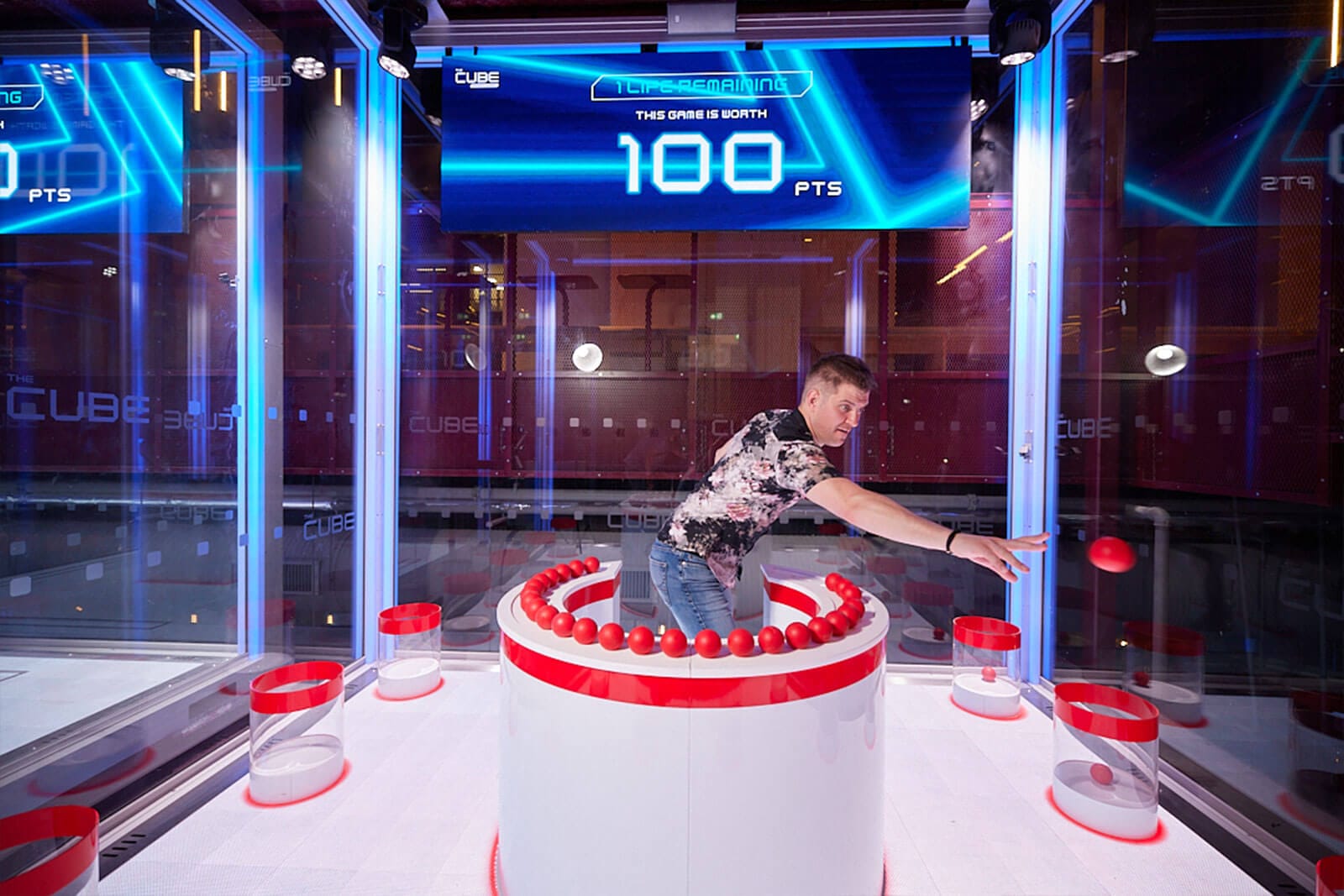
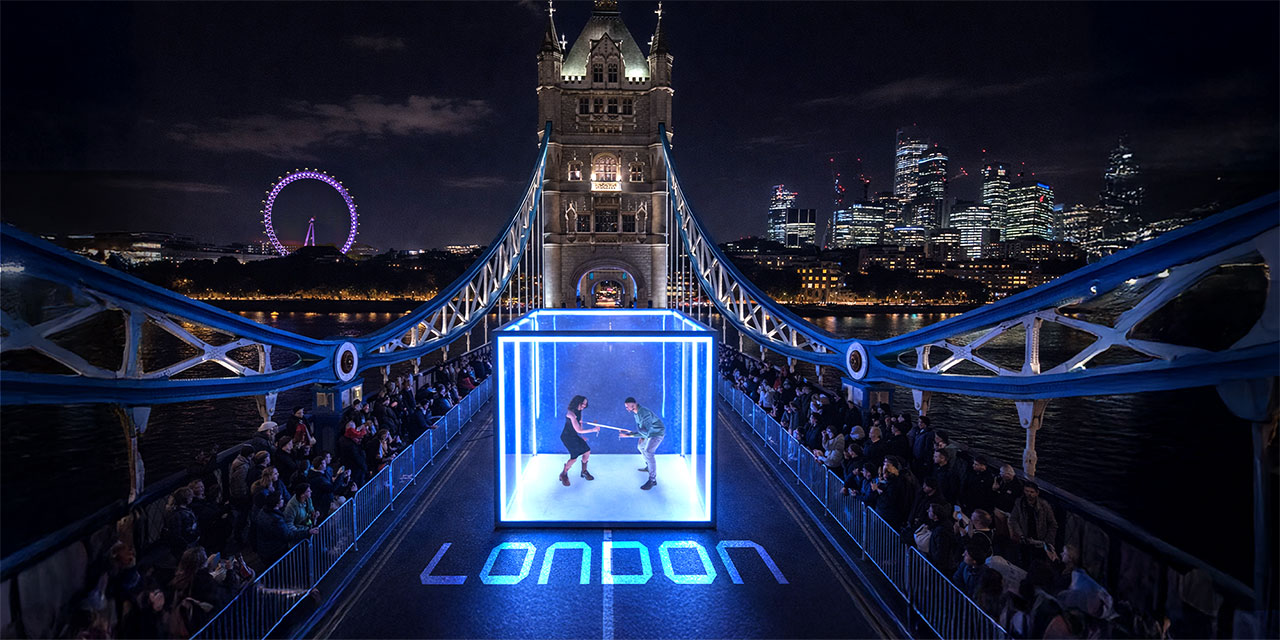
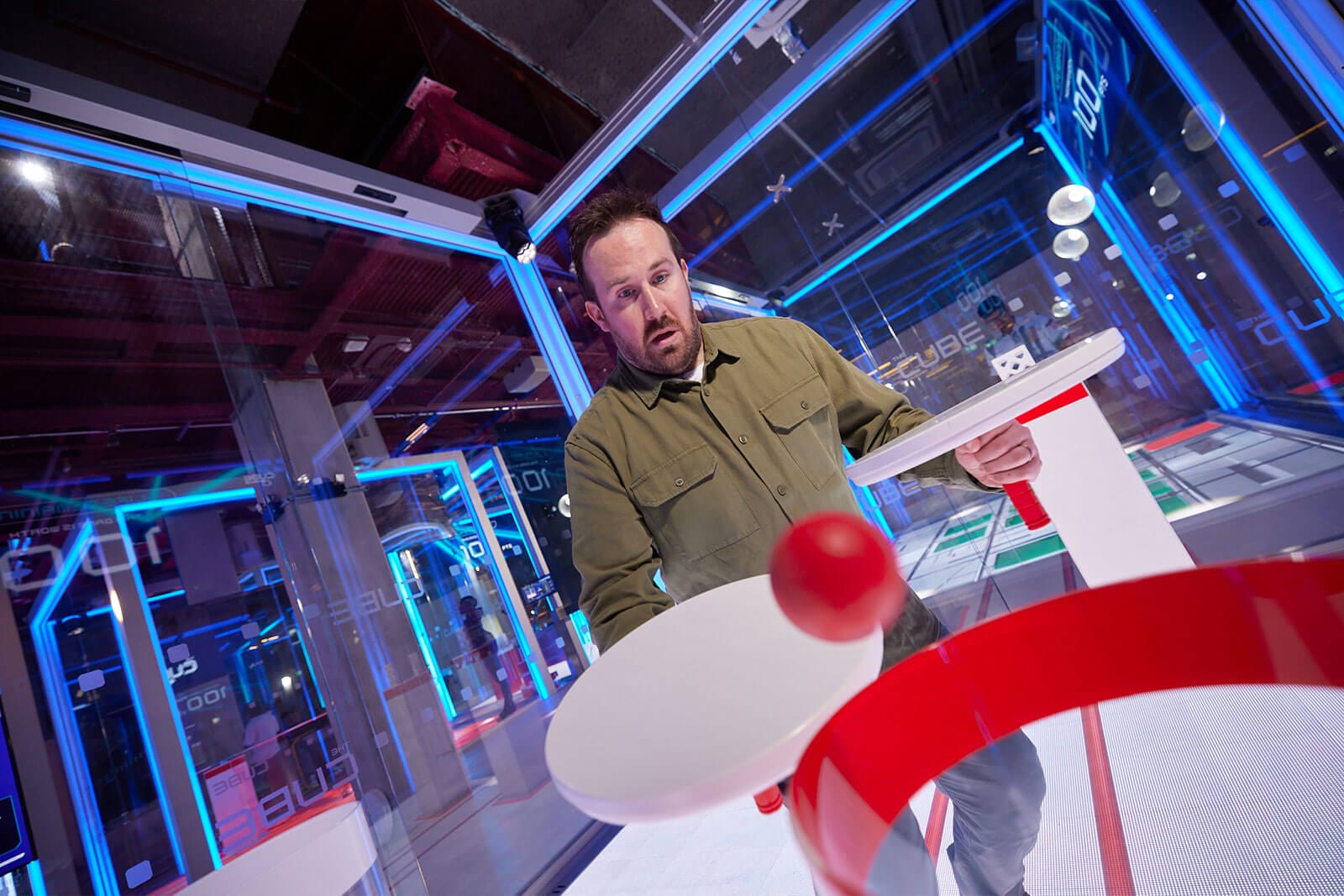
THE CUBE at Canary Wharf is a clean example of the category, and one of the better-positioned options for a London corporate booking. The format comes from the hit TV show. You step into the iconic glass box and take on seven short timed challenges across balance, memory, reactions, judgement and nerve. None of the games require athletic ability, but all of them require focus, and the spectator dynamic of having the rest of the team watching through the glass does the work that a corporate facilitator usually would.
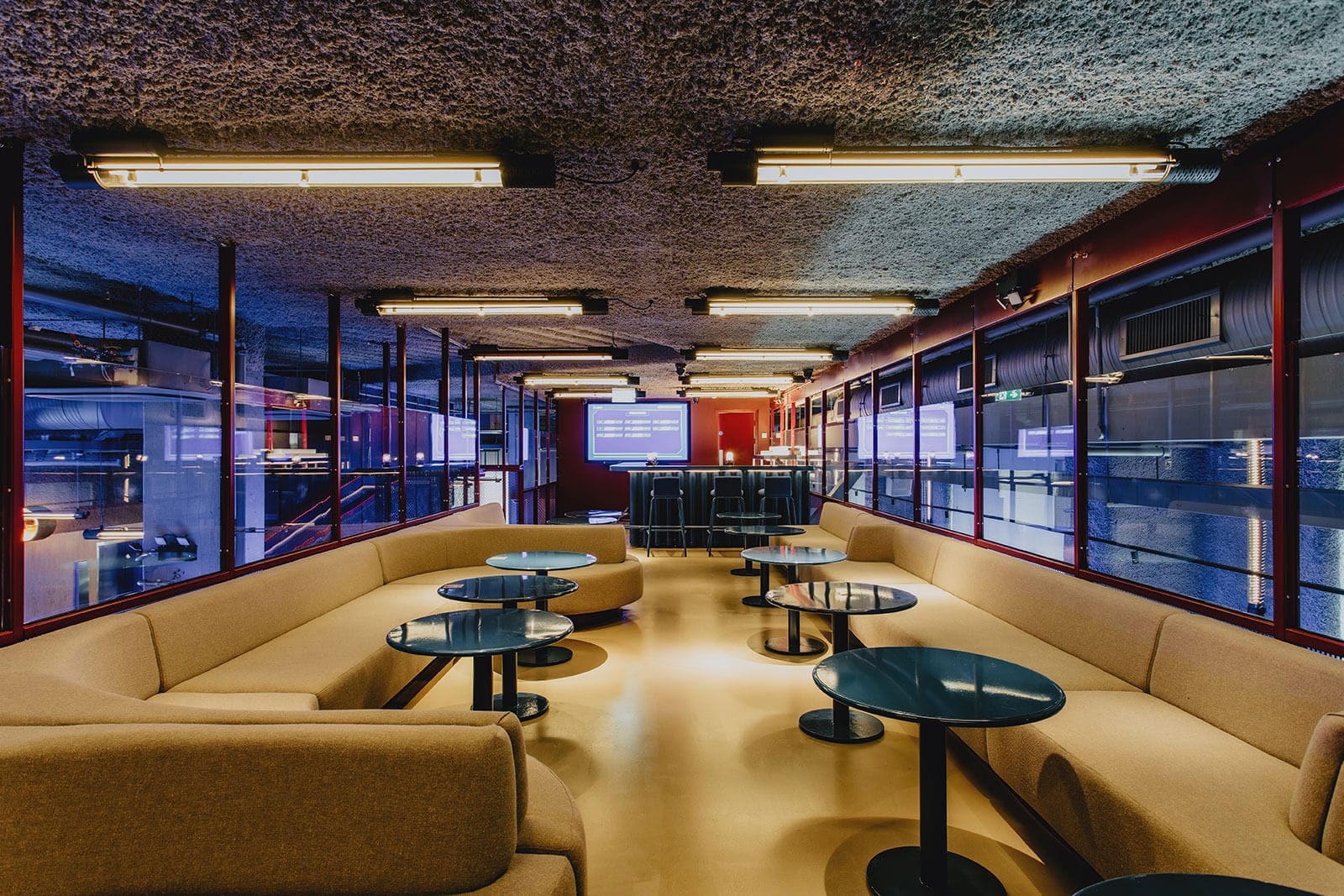
The venue is designed around the social part of corporate socialising, which is the thing that often gets neglected at activity-only venues. 21 individual glass cubes spread across three floors, six mixologist-led bars, food from THE BUTCHER and Toni Loco, plus VIP areas and full venue hire for larger bookings. So the activity doesn’t end and the evening doesn’t fall apart. The bar absorbs whatever happened in the cube and the conversation runs from there.
It also scales properly. THE CUBE is played in groups of four (splitting into two teams of two inside), and the throughput across 21 cubes means even larger teams can play in parallel. That sounds like an operational detail, but for anyone who’s ever booked a team of thirty into a venue that turned out to only accommodate eight at a time, it’s the difference between a working evening and a queue.
Active alternatives if your team is up for it
For teams that genuinely like getting outside, the city has the obvious options. Padel is having its moment and is the easiest active social to recommend because the learning curve is short and people who’ve never picked up a racket can still have a good game. Tennis and squash are credible alternatives for groups that already have some shared interest there. Hiking works for the right kind of company offsite but rarely for a Tuesday-evening work social.
These work best for teams that already have the right shared profile. They don’t work for a 30-person mixed team where four people are wearing trainers, three are wearing heels, and someone’s recovering from a knee injury they didn’t mention. Worth thinking honestly about the group before committing to a physical activity.
Slower alternatives when the brief calls for it
Not every work social needs to be high energy. For client-facing events, welcoming new joiners, or hosting senior stakeholders, sometimes the right format is exactly the dinner the rest of this article has been talking down. The skill is reading which kind of event you’re planning.
The best slower-paced work socials still benefit from structure. A long table dinner with no seating plan tends to collapse into the same three sub-conversations everyone could have had at the office. The version that works is closer to a curated experience: a wine tasting, a chef’s table format, a venue that designs the evening rather than just hosting it. Less about the activity, more about the framing.
Inclusivity is the actual filter
The most important decision in planning work social ideas in London isn’t the activity. It’s whether the activity works for every member of the team. Every group has introverts and extroverts, the keen and the reluctant, people who’ll throw themselves at anything and people who’d rather watch. The work social that goes well is the one where the reluctant person isn’t visibly suffering by 8pm.
This is what makes the spectator-friendly category (game-show formats, competitive socialising venues, anywhere with a meaningful “watching” component) particularly useful for corporate days out in London. There’s a credible way to participate even for people who don’t want to be at the centre of it.
Why it matters
A good work social genuinely shifts how a team operates afterwards. People who’d never normally interact end up with a shared reference point. Stories get traded. The shorthand that makes a team actually function gets refreshed. None of this happens at a poorly-formatted social, where the evening defaults to small clumps of people who already talk to each other.
THE CUBE happens to be a strong example of how to design around all of this. The category around it (competitive socialising venues, structured experience days, format-led nights out) is the actual answer for most London corporate teams now. Whichever venue you pick, the principle is the same. Let the format do the heavy lifting and the team will get more out of the evening than they would have from another round at the same Canary Wharf pub.
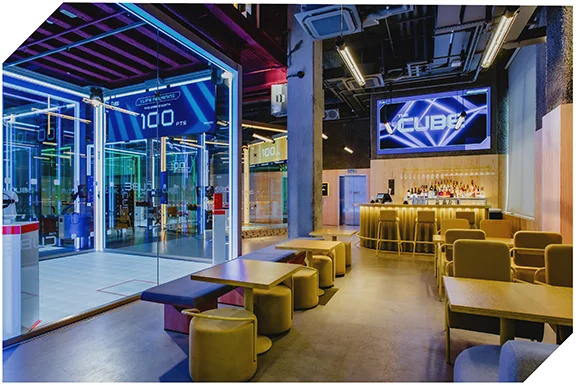
Friendly competition and Cocktails.