
Manchester Nightlife Is Changing, and Not in the Way You’d Expect
6th August 2026
Nightclubs across the UK have been closing at a rate that has alarmed the entire industry. Between June 2020 and June 2024 the country lost 480 of them, and by the end of 2024 the total had fallen from 1,240 to 835. The Night Time Industries Association has warned that at the current rate the UK could lose its last nightclub by the end of the decade.
Manchester, a city whose identity was built on decades of legendary club nights, looks like exactly the place that story should apply to. Except the numbers say otherwise. While most UK regions saw nightclub numbers shrink in 2024, Manchester’s grew by 4.3%.
So what’s actually going on here?
A city going against the national trend
The national picture is bleak. Yorkshire lost 45% of its nightclubs in four years, Lancashire 42%, with Scotland and Wales both above 30%. Manchester’s small increase puts it among a handful of regions where things are improving.
More nightclubs doesn’t necessarily mean more clubbing in the traditional sense, though. It suggests the night-time economy here is adapting rather than shrinking, and a good deal of that adaptation is happening outside nightclubs entirely.
The venues quietly reshaping the city’s evenings
Across Manchester’s larger leisure complexes, competitive socialising venues have opened at a pace that wasn’t happening five years ago, taking floorspace that would once have gone to retail or a conventional bar. These are venues built around interactive games rather than a dancefloor.
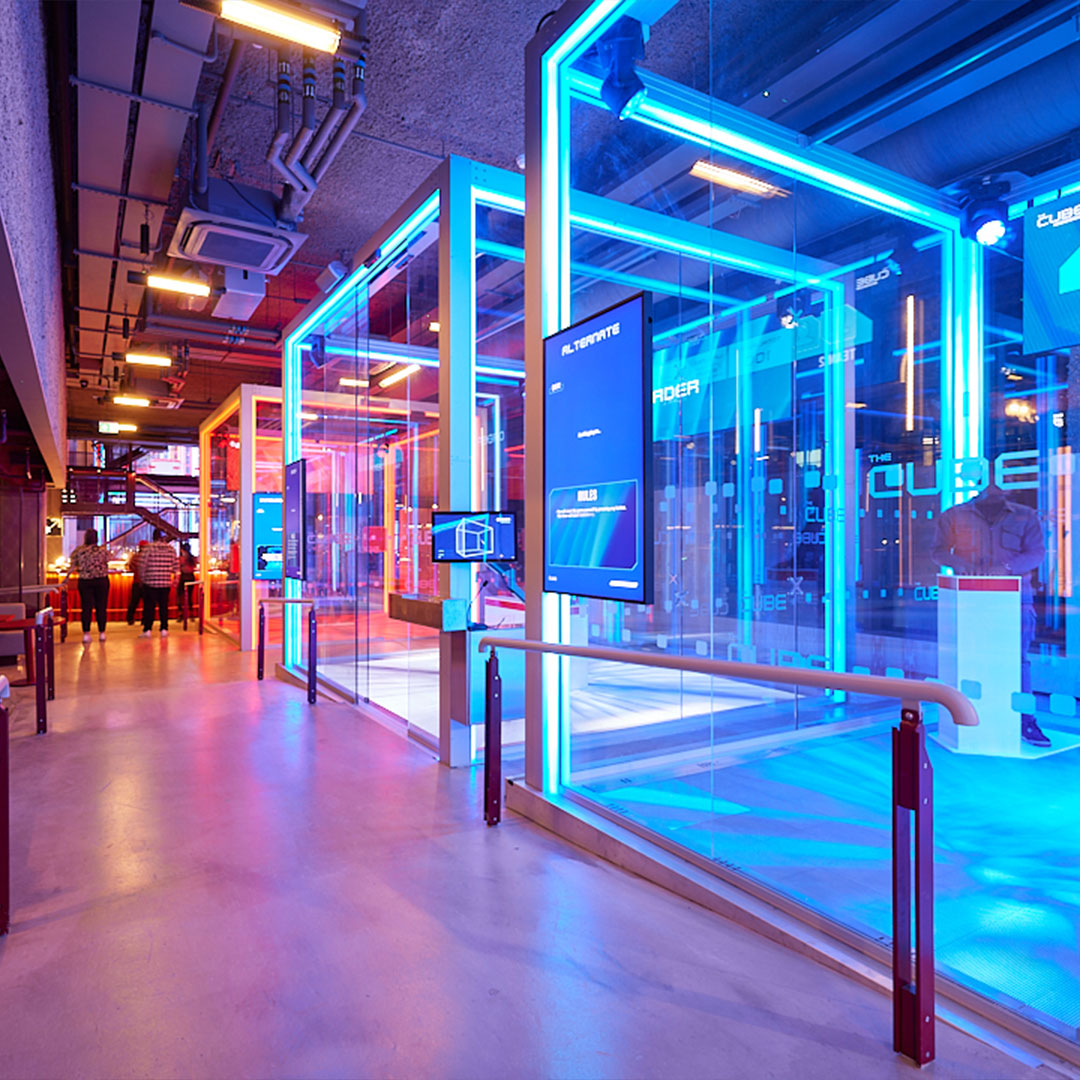
THE CUBE at Urban Playground is one example, built on the format of the BAFTA-winning ITV game show and giving groups something to do together rather than somewhere to stand.
The shift isn’t accidental. The city’s biggest entertainment destinations have repositioned around round-the-clock leisure built on immersive experiences and technology rather than a traditional bar and club model.
What’s notable is the audience. Operators in this space talk about a broad age range, often early teens through to mid-forties, and an explicit aim of drawing more women into a category that has historically skewed male. That’s a different commercial model to a nightclub, which depends on a narrower group willing to queue, pay entry and drink heavily in a few peak hours.
Why it’s happening now
The forces here are the same ones reshaping nightlife everywhere. Younger consumers drink differently. The Health Survey for England found 70% of non-drinkers in 2024 were aged 16 to 24, and competitive socialising participation has grown 13 percentage points across UK adults since 2019.
Manchester has advantages many cities lack: a large student population, a strong visitor economy and a city centre with the space and investment to support large-format venues. Several major complexes have signed multiple competitive socialising operators within two years.
Clubbing isn’t dying here, it’s sharing the stage
It would be wrong to say the city has fallen out of love with clubbing. The independent scene still produces some of the most talked-about nights in the country.
What’s changed is that clubbing is no longer the default. A generation with more choice and less patience for one format dictating the whole night now has somewhere else to go. Manchester’s nightlife isn’t shrinking so much as widening, which is a healthier problem to have than the one most of the country is dealing with.
Curious what the newer end of Manchester nightlife looks like?
